Last updated: November 05, 2026
Key Takeaways
- Emergency claim evidence is the record set that ties an injury or illness to a date, place, provider, and cost.
- Save records showing the provider, dates, reason for care, and any charge that could later be disputed.
- Use one sequence: identify, request, verify, copy, and back up.
- The strongest papers link treatment details to the bill.
- Quick answer: save at least 4 core documents before you leave the clinic or hospital.
Emergency claim evidence is the paperwork that proves what happened in an emergency room, an ambulance, a clinic, or a hospital and what was done there. For a nomad insurance claim documents for emergencies abroad file, the job is not to build the full claim yet; it is to save the right records before they vanish into a hospital archive or a payer portal. For policy basics, see your insurer’s claims page, the WHO patient safety guidance, and your own policy terms.
This article is for a traveler, remote worker, or digital nomad who already has a treatment date, a provider, and some form of invoice or discharge paperwork. It assumes you are trying to protect a future reimbursement claim, not decide whether the claim itself is covered. If the situation involves a major emergency, surgery, transfer between facilities, or any language barrier that makes the documents hard to understand, consult the treating facility’s billing desk or a qualified adviser while the records are still on site. This is information, not financial advice, and your own policy terms and local rules may change what matters. For claim-process context, see How to file a nomad insurance claim and What counts as medical documentation.
What emergency claim evidence means at a clinic or hospital
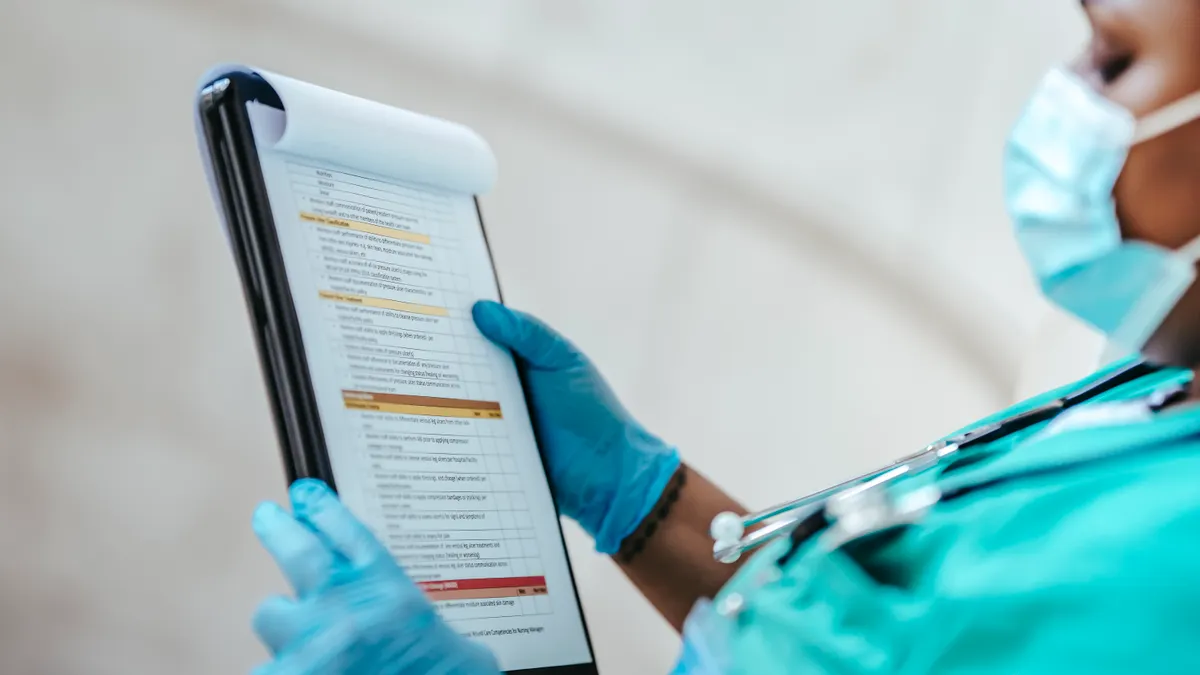
Emergency claim evidence means the records that tie a specific injury or illness to a specific date, place, provider, and cost. For this purpose, the most useful papers are the emergency room note, ambulance receipt, admission record, hospital discharge summary, treatment invoice, and, when surgery happened, the surgical report. Those are not interchangeable. A receipt shows money changed hands; a discharge summary shows the clinical course; an admission note shows why the hospital kept you; a surgical report shows the procedure that was actually performed. If you are unsure which record matters most, consult a billing or records professional.
This matters because many claims fail on documentation, not on the underlying event. A generic payment slip with no diagnosis, no itemization, and no provider name is weak evidence. A discharge summary without the final bill is incomplete. A photo of a wristband or a prescription alone is usually not enough. The reader’s goal is to capture the record set while the clinic still has the chart open and the hospital still can print or email attachments in PDF form. The CDC travel health pages and most insurer help centers stress keeping original records.
There is a practical limit, though: if the event involved ICU care, trauma, an operation, or a transfer between facilities, the paperwork can become technical fast. In those cases, the safest practical move is to preserve documents first and sort the meaning later, while also asking a billing or records professional for help if you can. The terms to remember are simple. “Itemized” means each charge is broken out separately, not bundled into one total. “Admission” means the hospital formally registered you as an inpatient, even for a short stay. “Discharge” means the facility ended that stay and documented the outcome.
For background on claim rights and timing, the hub on nomad insurance claim rights and recovery is the right next stop after this page.
What to save before leaving the clinic or hospital
Save the documents that identify the provider, the dates, the diagnosis or reason for care, and every charge that could later be disputed. In a clinic, that often means the consultation note, diagnostic test results, prescription list, and invoice. In a hospital, it usually means the emergency room paperwork, admission note, progress notes if available, discharge summary, surgical report if any procedure happened, and the final bill.
The first rule is simple: ask for everything in PDF or printed form before discharge if possible. A paper packet can be photographed, but a PDF is easier to keep legible at 2 a.m. on a phone. If the desk offers an email copy, verify that the email shows the facility name, the patient name, the date of service, and a total amount. If the file arrives as a portal link, download it immediately rather than trusting a link that may expire in 7 days or less.
The second rule is to capture the billing chain. If there was an ambulance ride, save the ambulance receipt or transport invoice separately from the hospital bill. If the emergency room billed you and then transferred you to a ward, keep both sets of documents. If the hospital gives you only a summary page, ask whether a more detailed itemized statement exists. “Itemized” matters because many insurers need line-level charges for room use, imaging, medication, physician fees, or supplies.
The third rule is to check that names match. The passport name, hospital registration name, and policyholder name should align as closely as possible. A nickname, transliterated surname, or reversed family name can create avoidable friction later. If the clinic cannot correct the record immediately, ask for an annotation letter or a corrected discharge summary. That is slower than a clean document, but better than leaving an identity mismatch unaddressed.
How do I collect emergency claim documents before I leave?

Collect them in a fixed sequence: identify, request, verify, copy, and back up. The order matters because emergency departments close charts quickly, and once you leave a hospital, the easiest version of the document is often gone.
- Ask for the discharge packet before you walk out. Request the discharge summary, final bill, prescription list, and any test reports at the billing desk or nursing station. Verify that the packet includes your full name, treatment date, and provider name. A problem sign is a summary with no date or no hospital letterhead, but if you are unsure, consult a records or billing professional.
- Ask whether the emergency room note exists as a separate record. In many systems the ER paperwork is distinct from the discharge summary. Verify that it shows triage reason, arrival time, and diagnosis or impression. A problem sign is “walk-in visit” with no clinical details, because that is weak support for the claim.
- Request the admission record if you were kept overnight or moved to a ward. This record should show the admission date, ward or unit, and reason for inpatient care. Verify that it reflects the actual stay length, even if it was less than 24 hours. A problem sign is an outpatient label when you were clearly admitted.
- Collect the ambulance receipt or transport invoice separately. Verify the pickup and drop-off locations, transport date, and the company or hospital transport unit. A problem sign is a payment receipt with no route information, because it may not prove the trip itself.
- Save any surgical report the same day if a procedure happened. Ask for the operative note or surgical report, not just the anesthesia bill. Verify that it lists the procedure performed and the date. A problem sign is a vague “procedure done” line with no specifics.
- Photograph every paper page in good light. Use flat, shadow-free photos at full frame, one page per image, then store them in a PDF or cloud folder. Verify that the text is readable when zoomed to 100%. A problem sign is glare, cropped edges, or a blurry barcode.
- Check the currency and payment status on every invoice. Confirm whether the bill is marked paid, pending, or partially paid. Verify the amount actually charged and the date the charge was issued. A problem sign is a receipt that shows only a deposit, not the full service cost.
- Create one backup immediately. Send copies to a secure cloud account and one separate email inbox within 30 minutes of receiving them. Verify that the files open on a second device. A problem sign is having the only copy on a phone that may be lost, erased, or stolen.
The key judgment here is not “more paper is always better.” It is “collect the record that proves the event and the cost.” A thick stack of irrelevant leaflets does not help. A clean set of dated, named, legible records does. For storage help, see secure cloud backup tips and how to scan documents on your phone.
Which emergency claim papers matter most, and which do not?
The most valuable papers are the ones that connect the dots between treatment and charge. A hospital discharge summary shows what happened clinically. An admission record shows the stay was not just an outpatient visit. A treatment invoice shows the billed amount. An ambulance receipt shows transport. A surgical report shows a procedure, which matters when the claim later needs proof that the hospital did more than observation.
Less useful papers are still worth saving, but they are secondary. A pharmacy receipt may support medication costs, yet it rarely explains the whole emergency. A lab result can confirm testing, but not the full episode. A doctor’s business card has contact details, not evidence of care. A card terminal slip proves payment, not necessarily treatment. The rule is to prioritize records that say who treated you, when, why, and for how much.
This is also where people make a costly mistake: they assume a single discharge summary will carry the claim on its own. Sometimes it will not. If the summary omits the procedure details, the inpatient days, or the itemized billing, you will later spend time asking the hospital for addenda. That can be harder if you are already in another country. A cleaner approach is to leave with the discharge summary plus the bill, then ask for a surgical note or ambulance record while you are still local if those exist.
One more distinction matters. An “admission note” is not the same as an “admission record.” The note usually explains the clinician’s reasoning. The record usually proves the administrative intake. If you have only one, keep it. If you can get both, even better. The same logic applies to the ER paperwork: the triage sheet, physician note, and discharge instructions each answer a different question, and together they build a stronger file.
When should I stop waiting and get help from the hospital?
Get help from the hospital or a qualified adviser when the paperwork is incomplete, contradictory, or hard to obtain in time. That is not a failure; it is a sign that the case needs human follow-up. The right response is usually to ask the facility’s billing office, records desk, or patient relations unit for corrected copies and written confirmation.
No discharge summary is available: This means the clinical record may still be open or not yet released — ask for a provisional summary, then request the final version before leaving the country.
The invoice is only a single total with no itemization: This may not show what services were billed — ask for a line-by-line statement that lists room, physician, pharmacy, imaging, and procedures where applicable.
The hospital used a local-language form you cannot read: This means the claim may later depend on translation — ask for an English copy if the hospital offers one, or obtain a certified translation when required by the insurer.
Your name is misspelled or does not match the passport: This can create identity and policy matching problems — request a corrected document or an explanatory letter from records staff before you leave.
You had surgery, an ICU stay, or an ambulance transfer: These events usually require extra proof beyond a receipt — ask for the operative note, ICU chart summary, or transport record, and if the facility will not release them, escalate to records management.
The hospital says records will be ready only after you depart: This means delay is likely — ask for an email delivery date, the records contact name, and a case number, then keep that contact in your archive.
The wrong move is to keep waiting at the front desk until closing time and leave with nothing. The better move is to get the minimum set now and document what remains outstanding. That written trail can matter later.
Common mistakes with emergency documents and what they cost
People usually lose claims by losing the paper trail, not by losing the case itself. Four mistakes come up again and again.
-
Taking only a payment receipt. The consequence is that you can prove you paid, but not what you were treated for. The correct alternative is to also keep the discharge summary or consultation note.
-
Leaving without the ambulance receipt. The consequence is that transport can become hard to link to the emergency episode. The correct alternative is to request a separate transport invoice before leaving the ambulance desk or emergency discharge area.
-
Assuming the hospital bill is enough. The consequence is that the bill may lack diagnosis, admission details, or procedure names. The correct alternative is to pair it with the discharge summary and, if surgery happened, the surgical report.
-
Saving blurry photos only. The consequence is unreadable dates, names, and totals. The correct alternative is to scan or photograph each page flat, with the full margin visible, and store a second copy in cloud storage.
-
Ignoring translation until later. The consequence is a document set that becomes harder to decode once you have left the country. The correct alternative is to ask for an English version or arrange a certified translation while the facility still knows your case number.
-
Mixing documents from different visits. The consequence is confusion about which record belongs to which episode. The correct alternative is to label files by date, facility, and service type the same day, for example: “2026-03-14_ER_CityHospital.pdf.”
The best habit is boring and exact: one folder per incident, one file name per document, one backup outside the device. That is the kind of organization that keeps a claim from turning into a scavenger hunt.
What changes if the emergency happened in a different country?
The paperwork should be the same in concept, but the form and language can differ, and that is where extra care helps. Some hospitals issue a discharge summary only in the local language. Some ambulance services bill through the hospital rather than separately. Some clinics give a receipt that doubles as the invoice. None of that is unusual, but it means you must read the document by function, not by title.
If the emergency happened in a country with different invoicing practices, focus on three anchors: the provider’s official name, the date of service, and the amount charged. If you can also get the diagnosis code, procedure name, or ICD-style classification, that is useful, but not always available at the bedside. ICD refers to the International Classification of Diseases, a standard coding system used by many health systems to name diagnoses and procedures.
Another edge case is a telehealth follow-up after the emergency room visit. Save the consultation note separately if it relates to the same episode, but do not merge it into the emergency file unless the record clearly connects them. A later video consult can help explain symptom progression; it does not replace the original emergency record.
If a child, dependent, or traveling companion was treated instead of you, keep the same core records and make sure the patient name, service date, and provider match that person’s visit. If the clinic used a city hospital emergency department, the same rules apply: keep the city hospital records, because the consequence of missing them is a weaker claim and a harder appeal. For help with family or companion claims, see dependent coverage and travel companion claims.
Drafted with AI; not yet reviewed by a person.