Last updated: August 11, 2026
- The first thing to check: how the plan defines “pre-existing” Start with the definition, not the price.
- Basic travel medical plans : often exclude pre-existing conditions, though some may handle acute emergencies.
- Pull the policy wording for each plan and find the exact pre-existing condition definition.
- Use this checklist: Does the policy define pre-existing conditions by diagnosis, symptoms, treatment, or all three?
Quick Answer: For pre-existing conditions nomad insurance: which plans offer coverage, the answer is usually 3 types of plans: fully underwritten international health plans, plans with acute-onset benefits, and some plans with stable-condition rules. Coverage can still be partial, so check the wording with a licensed insurance professional before you buy.
Key Facts
– Pre-existing conditions nomad insurance: which plans offer coverage depends on the policy definition, not just the diagnosis.
– Some plans cover acute onset only; others cover stable conditions after a look-back period.
– A policy that sounds generous can still exclude a condition if it was known, treated, or symptomatic before the start date.
– Ask for written confirmation before purchase; a phone call is not enough.
– Compare emergency care, follow-up care, prescriptions, and evacuation separately.
– Travel policies and international health insurance are not the same product.
A flare-up abroad can turn expensive fast. When you have a pre-existing condition and you’re trying to buy nomad insurance, the real question is blunt: will this plan cover a flare-up, a follow-up, or an emergency tied to something you already have? Sometimes yes. Sometimes only after exclusions, waiting periods, or extra underwriting. The topic here is pre-existing conditions nomad insurance: which plans offer coverage, because the answer changes a lot depending on your diagnosis, your country of residence, and how the insurer defines “pre-existing.”
This is information, not financial advice. Your own situation can change the right choice, so a qualified adviser or licensed insurance professional should review your details before you buy.
The first thing to check: how the plan defines “pre-existing”
Start with the definition, not the price. A policy can look generous until you read the fine print and see that anything “known, disclosed, treated, or symptomatic” before the start date is excluded. Broad wording like that may still be useful for accidents and brand-new illnesses. But not for an ongoing condition. For a policy interpretation like this, consult a licensed insurance professional, because the controlling language is usually in the full policy, not the brochure.
I’d treat this as a three-part test — a rough screen, nothing more:
- Did the condition exist before the policy start date?
- Were you aware of it, did you seek treatment for it, or did symptoms appear before the policy started?
- Does the policy exclude the condition outright, cover it only if stable, or cover some related emergencies but not the chronic care?
Insurers do not all draw the line in the same place. Some focus on diagnosis and treatment history. Others care about any signs or symptoms, even without a formal diagnosis. A few plans offer limited coverage if the condition is stable and unchanged for a set period, but that stability rule is not universal and can be easy to miss. Honestly, that fine print is where the sausage gets made. If you are unsure how your history fits, consult a licensed insurance professional before relying on a brochure summary.
Here’s the practical move: before you compare benefits, read the policy wording for “pre-existing condition,” “acute onset,” “stability,” “look-back period,” and “medical underwriting.” If those terms are missing, vague, or buried, assume the plan may not help much with an ongoing condition.
| Situation | Best Path | Why Other Options Fail |
|---|---|---|
| You have a chronic condition with past treatment | Read the pre-existing condition definition first, then check exclusions | A cheap plan may still exclude the condition entirely |
| You only want emergency protection for something minor and stable | Look for acute-onset or emergency-specific wording | Some plans cover emergencies but not routine care or follow-up |
| You’re unsure whether a past symptom counts | Disclose fully and ask for written confirmation | Guessing can lead to denied claims later |
Quick check: If a claim were filed tomorrow, would the insurer say your condition existed before the policy started? If yes or maybe, you need to read the exclusion language line by line.
Which nomad insurance plans offer some coverage for pre-existing conditions
The plans that help most are usually not the cheapest basic travel policies. They are the ones that either underwrite you individually or offer limited coverage for acute onset or stable conditions. “Offer coverage” does not always mean “cover everything.” It usually means one of four things:
- Full underwriting with acceptance of the condition
- Coverage only for acute onset
- Coverage only if the condition is stable
- Coverage for unrelated claims, but not for the condition itself
So a generic “nomad insurance” label is not enough. I’d sort the options this way:
- Specialized long-stay travel insurers: sometimes offer more flexible underwriting, especially if you disclose everything upfront.
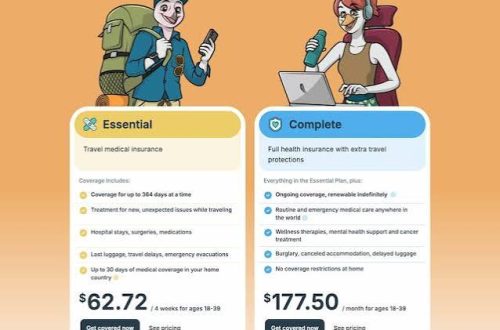
- International health insurance: often better for ongoing care, but usually more expensive and more like true medical insurance than short-term travel cover.
- Basic travel medical plans: often exclude pre-existing conditions, though some may handle acute emergencies.
- Employer-style expat medical plans: can be broader, but eligibility and residency rules can be strict.
If you have a condition that needs regular medication, monitoring, or specialist visits, I’d be careful about assuming a travel medical plan will help. Many of them are built for new incidents, not continuity of care. A licensed insurance professional can tell you whether your plan is built for emergency-only coverage or for ongoing treatment.
What happens if your condition gets worse abroad? That question cuts through the marketing. If the answer is “the plan might cover emergency stabilization but not ongoing treatment,” that is not the same as real coverage. It may still be worth having, but only if you understand the gap.
- List every diagnosed condition you have had treatment for, plus any ongoing medication or follow-up care.
- Pull the policy wording for each plan and find the exact pre-existing condition definition.
- Check whether the plan uses “acute onset,” “stable,” or “fully excluded” language.
- Ask the insurer or broker, in writing, how your specific condition would be treated.
- Compare that answer against the plan’s emergency, inpatient, outpatient, and medication benefits.
- Only then compare premiums and deductibles, because low price is meaningless if the condition is excluded.
For authoritative guidance on how travel medical policies and exclusions are described, I’d also look at consumer explanations from the U.S. National Association of Insurance Commissioners and the UK Financial Conduct Authority, if either is relevant to your market. For example, the NAIC consumer resources explain how exclusions and underwriting can affect claims, and the FCA’s insurance guidance explains why policy wording matters.
Quick check: If your condition is stable but ongoing, you probably need either explicit underwriting or a plan that clearly states how stable pre-existing conditions are handled. A plain travel policy often is not enough.
If your condition is stable, your answer may change
A condition that has held steady for a while can open more doors. But “stable” is one of those words insurers use loosely. Some mean no new treatment. Some mean no hospital admissions. Others mean no change in medication, no symptoms, and no investigations.
If you’re dealing with asthma, hypertension, diabetes, thyroid disease, anxiety, migraine, or another long-term condition, the question is not just whether you have it. The question is whether the policy treats it as controlled, disclosed, and accepted. If it does, you may find limited coverage for complications or urgent care. If it doesn’t, the condition can be excluded even if you feel fine.
I would not lean on a friend’s experience with the same diagnosis. Two people can have the same condition and get very different outcomes because one has recent specialist visits, a medication change, or a hospital stay in the look-back period.
A sensible process is:
- Write down the date of diagnosis, last medication change, last flare-up, and last hospital or urgent care visit.
- Compare those dates with the plan’s stability or look-back requirements, if the insurer uses them.
- Ask whether the insurer will cover unrelated claims normally even if the condition itself is excluded.
- Ask whether emergency stabilization, prescription refills, or specialist follow-up are covered after a claim starts.
- Request the answer in writing, not just on a call.
- If the answer is vague, assume the policy is not designed for your condition.
The trade-off is obvious: plans that are friendlier to pre-existing conditions are often pricier, narrower in geography, or stricter on documentation. But a cheap policy that ignores your real risk can be false comfort.
Quick check: If your condition hasn’t changed recently and you can document that cleanly, you may qualify for more options than someone with a recent flare-up or medication adjustment.
When acute-onset coverage matters more than full coverage
If full coverage is unlikely, acute-onset benefits may be the next best thing. These provisions usually deal with a sudden, unexpected emergency tied to a condition that existed before the policy started. That is not the same as chronic management.
For example, if a policy covers acute onset, it may help if you have a sudden, serious episode that needs emergency care. But it may still deny follow-up visits, prescription changes, rehabilitation, or anything the insurer sees as expected maintenance. That distinction matters because many readers assume “covered” means “covered like normal.” It usually does not.
This is also where people get tripped up by wording. Acute onset often has its own limits: age cutoffs, symptom timelines, geographic exclusions, and requirements that you were stable before departure. If any of those are missing from the brochure but present in the policy, the brochure is not the document that controls.
Here’s the best way I’d approach it if full pre-existing coverage is unlikely:
- Check whether the plan mentions acute onset explicitly or only in marketing language.
- Read the section that defines what counts as sudden, unexpected, or emergency care.
- See whether the plan excludes known conditions entirely, even for emergencies.
- Look for caps on emergency treatment, ambulance, hospitalization, and evacuation.
- Ask whether follow-up care after the emergency is included or excluded.
- Confirm whether prescription replacement is covered if your medication is lost, delayed, or changes during treatment.
The honest drawback is that acute-onset coverage is narrower than many people hope. Useful, yes. A substitute for real ongoing treatment coverage? No. If you need planned care abroad, I’d treat this as a backup, not the main solution.
Quick check: If you mainly want protection for a sudden emergency, not ongoing treatment, acute-onset language may be the part of the policy that matters most.
The questions that separate useful plans from useless ones
Once you’re down to two or three plans, stop comparing headlines and start asking detailed questions. Generic brochures hide the parts that matter most.
Use this checklist:
- Does the policy define pre-existing conditions by diagnosis, symptoms, treatment, or all three?
- Is there a stability period, and what exactly resets it?
- Are chronic conditions excluded outright, or only excluded for treatment related to the condition?
- Does the plan cover emergency stabilization but not follow-up care?
- Are prescriptions, specialist visits, labs, or imaging covered if the condition flares?
- Is there a medical history form, and can the insurer later deny a claim if you left out anything relevant?
- Is the plan sold as travel insurance, travel medical, or international health insurance?
That last question matters. Travel insurance and international health insurance are not the same product. Many nomads assume the labels are interchangeable. They are not. A travel policy may be fine for a short trip, lost luggage, and emergency care. A true international health plan is more likely to handle ongoing medical needs, but eligibility, residency, and underwriting can be stricter.
If you are comparing plans on your own, I would also check the insurer’s claims instructions and medical review process. A plan with loose marketing language but strict claim documentation can be painful when you actually need care.
For more structured reading, I’d point you to the World Health Organization’s guidance on continuity of care and to the U.S. Centers for Medicare & Medicaid Services and other national consumer-facing insurance resources where relevant, though the exact rules will vary by country. For example, CMS explains how coverage rules vary by policy type, and WHO materials emphasize continuity when treatment must continue across settings.
Quick check: If you can’t tell from the policy whether your condition is excluded, stabilized, or underwritten, the plan is not clear enough for your situation.
Edge cases where the normal advice breaks down
If your case fits one of these, the usual “compare exclusions and pick the best value” advice is too simple.
-
You have been symptom-free for years, but never formally diagnosed.
What changes: insurers may still treat prior symptoms as pre-existing.
What to do instead: disclose the history and ask how “symptom onset” is treated. -
You recently changed medication or dosage.
What changes: that can reset a stability period.
What to do instead: treat the condition as recently active until the insurer says otherwise in writing. -
You need regular prescriptions rather than hospital care.
What changes: many travel plans focus on emergencies and exclude maintenance drugs.
What to do instead: ask specifically about outpatient medication coverage and refill limits. -
You travel through several countries, not just one base.
What changes: network access, evacuation rules, and local treatment reimbursement become more important.
What to do instead: verify geographic coverage and whether claims are limited to your country of residence. -
You have a mental health condition.
What changes: some policies treat mental health more restrictively than physical conditions.
What to do instead: read the mental health exclusions separately; do not assume the medical section covers it. -
You had a recent hospital stay, surgery, or specialist workup.
What changes: the look-back period may catch that even if you feel recovered now.
What to do instead: assume disclosure is required and ask whether the condition is fully excluded or only covered after a waiting period.
Quick check: If anything about your history is recent, unusual, or hard to classify, you are in edge-case territory and should not rely on a generic policy summary.
How I would work through the decision, step by step
Under real-world pressure, I’d use this order instead of starting with price.
- Name the condition clearly. Write down diagnosis, treatment, symptoms, and medication.
- Find the policy definition. Search the document for “pre-existing,” “acute onset,” “stable,” and “medical history.”
- Classify the risk. Ask whether you need emergency-only protection or coverage for ongoing care.
- Check the exclusions. Separate “condition excluded” from “condition covered only in an emergency.”
- Get written answers. A chat reply or email is better than a vague sales call.
- Compare the trade-off. Decide whether the plan helps enough with your actual risk to be worth the premium.
- Verify before departure. If the insurer asks for a declaration form or medical questionnaire, do not skip it.
A lot of people get this backward. They start with the cheapest premium and only later discover that the plan excludes the very condition they were trying to protect. So the safer route is to read the exclusion language first and only then compare price.
If the condition is chronic and already under treatment, your shortlist should be smaller and more specific. In particular, look for plans that say exactly how they handle disclosed conditions, because a vague “coverage may apply” is not enough.
Because of that, I would keep a written record of every answer you get from the insurer. If the claim is denied later, documentation matters.
Once you have the answers, compare them against your travel dates and your medication schedule. A plan that works for a six-week trip may fail on a six-month route.
For example, a policy may cover emergency care in one country but not prescription refills in another. That is a different risk profile, and it should change your choice.
Finally, if the insurer will not put the answer in writing, assume the verbal answer is not reliable.
Quick check: If the plan only works when everything goes right, it may not be the right plan for a pre-existing condition.
A lot of people get this backward.