Last updated: August 11, 2026
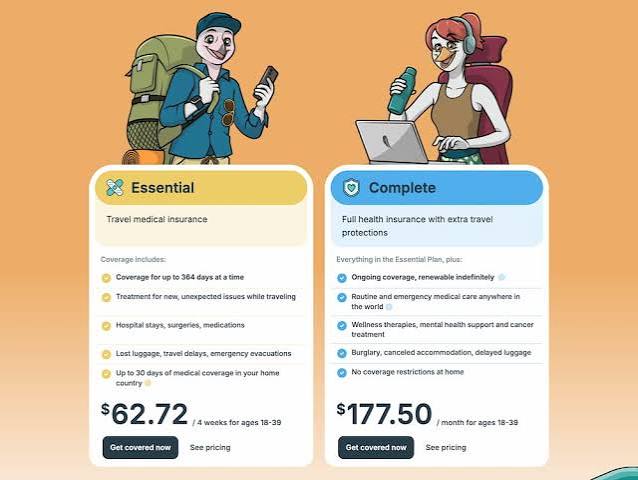
Quick Answer: For nomad insurance families with children: coverage options costs usually range from emergency-only travel cover to broader international health insurance, and a family can often expect premiums from about $50 to $500+ per month depending on age, destination, and benefits. The real question is whether the policy fits a child’s actual risks, not just the sticker price.
Key Takeaways
– Nomad insurance families with children: coverage options costs depend on emergency care, outpatient care, evacuation, and exclusions.
– A family may need direct billing, pediatric visits, prescriptions, and maternity terms, not only emergency cover.
– Deductibles, coinsurance, and exclusions can matter more than the monthly premium.
– Country limits, age caps, and pre-existing condition rules can change whether a policy works at all.
– Ongoing treatment, pregnancy, or a recent diagnosis? Talk to a qualified insurance adviser and, where relevant, a medical professional.
Nomad insurance for families with children makes sense when your household lives outside one home country, keeps moving, or spends long stretches abroad. For nomad insurance families with children: coverage options costs, finding a policy is not the hard part. The real task is checking whether it covers the risks children actually face: routine pediatric care, emergency treatment, evacuation, age limits, pre-existing conditions, and whether one parent can handle everything if things go sideways.
This piece is for families who can spell out their travel or residency pattern clearly, compare policy documents, and read exclusions line by line. It is not for anyone who wants a quick comfort buy without checking the fine print. Should your family have ongoing complex medical needs, a recent major diagnosis, a pregnancy, or a child who needs regular specialist care, I’d speak with a qualified insurance adviser and, where relevant, a medical professional before deciding. Information only. Not financial advice.
Who This Applies To — and Who Should See a Professional Instead
I’m writing for parents trying to insure one child or several while living nomadically: digital nomads, expatriate families, gap-year families, slow travelers, remote workers on assignment, and households moving between countries for school or work. The core problem is straightforward: once your address, length of stay, or country of treatment changes, a single-country health plan can fall apart, so a qualified insurance adviser can help check whether your coverage still fits.
A family may be a good fit for nomad insurance when the time abroad is temporary or split across countries, the children are generally healthy, and the parent can document passports, travel dates, and current residence. The family also needs a clear goal for the policy. Emergency-only cover is not the same thing as international health insurance. “Medical evacuation” is not a doctor visit or a vaccine appointment. And a policy that looks broad on paper can still be thin where children need it most. For background on cross-border coverage, see the European Commission’s healthcare abroad guidance: https://europa.eu/youreurope/citizens/health/unplanned-healthcare/index_en.htm
This is not a DIY situation if any of the following apply: the child needs ongoing prescriptions, specialist monitoring, developmental or behavioral care, neonatal care, or planned surgery; a parent is pregnant or expecting to give birth while abroad; the family has already started treatment and wants it covered as a new policy; or there is a history of denied claims. In those cases, I would ask a qualified adviser to review definitions, waiting periods, and exclusions before money changes hands. The right fit comes down to policy wording and medical history, so a professional review is often the safer route.
One more thing people miss: a cheaper policy can still leave the family paying out of pocket for the exact services children use most. I’d treat coverage design as the real product and price as only one part of the decision. That’s the trade-off.
The Step-by-Step Process for Nomad Insurance for Families With Children: Coverage Options and Costs (Done Correctly)
- Map the family’s actual travel pattern. Write down each country, expected length of stay, and whether any place is “home” for tax, school, or residency purposes. Confirm that the policy accepts your residence status and travel pattern. A warning sign is a plan that only works if you keep a fixed home address or if your stay pattern changes after purchase.
- Separate the coverage types you need. At minimum, check emergency medical, inpatient and outpatient care, prescription drugs, pediatric visits, maternity if relevant, and medical evacuation. Confirm the definitions in the policy wording, not the sales page. A warning sign is “medical” that really means emergency only, or “evacuation” that excludes local transport to a suitable hospital.
- Check child-specific eligibility rules. Confirm minimum and maximum ages, whether newborns are covered automatically, and whether children need to be listed individually. Confirm how the policy handles a child born after the policy start date. A warning sign is an age cap that cuts off coverage at a stage your child will reach mid-trip.
- Review pre-existing condition language line by line. A pre-existing condition is usually any illness, symptom, diagnosis, treatment, or medication use before the policy effective date, though the definition varies by insurer and country. It is best to confirm that wording with the insurer or a qualified adviser before you buy. Confirm whether there is a look-back period, a stability requirement, or a complete exclusion. A warning sign is vague wording that leaves common childhood conditions, such as asthma or eczema, in dispute.
- Compare deductibles, coinsurance, and out-of-pocket caps. A deductible is the amount you pay before the insurer starts paying; coinsurance is the share you still pay after that; an out-of-pocket cap is the ceiling on your payments for covered care, if the policy has one. Confirm whether these amounts apply per person, per family, or per policy year. A warning sign is a family plan whose “per person” deductible makes each child effectively start from zero.
- Test the provider network and reimbursement method. Check whether the insurer uses direct billing, cash reimbursement, or both, and whether pediatric clinics near your destinations can bill directly. Confirm claim submission deadlines and required documents. A warning sign is a plan that sounds global but expects you to pay all costs upfront and wait for reimbursement.
- Stress-test urgent pediatric scenarios. Ask how the policy handles fever in a child, dehydration, broken bones, lacerations, imaging, after-hours care, and hospital observation. Confirm whether telemedicine is included and whether referrals are required. A warning sign is a policy that covers hospitalization but not the doctor visit that sends you there.
- Estimate total cost, not just premium. Compare the premium with likely add-on costs: deductibles, copays, maternity riders, evacuation upgrades, and exclusions that force self-pay. Confirm the renewal rules and any premium increase triggers such as age bands or destination changes. A warning sign is a low monthly premium paired with high first-dollar exposure and narrow benefits.
- Document the family before purchase. Save the quote, full policy wording, schedule of benefits, application answers, and any email promises. Confirm that every child’s name, age, and relationship are correct. A warning sign is any mismatch between what the agent said and what the contract says.
When people ask about “costs,” I think in layers. Premium is only one layer. The real cost can creep up through deductibles, exclusions, excluded countries, claims friction, and the chance that a child’s ordinary care gets treated as non-urgent and therefore non-covered. Some family nomad policies are built for emergencies only. Others sit much closer to international health insurance. The label is less useful than the substance. For policy definitions and benefit categories, the U.S. National Association of Insurance Commissioners explains common health insurance terms here: https://content.naic.org/consumer/health-insurance
I’d also look closely at whether the policy is priced per adult and child separately or as a family unit. Family pricing can look efficient, but it does not guarantee that one child’s claim won’t eat up a disproportionate share of the plan’s usable benefits. The contract language decides that; the brochure doesn’t.
For official background on health coverage and cross-border care rules, I would start with the European Commission’s information on healthcare abroad and your own country’s health authority or insurance regulator. The rules vary by jurisdiction, and that variation is exactly why no universal cost formula is honest here. Apples and oranges. That’s the mess.
Critical Checkpoints: What to Verify Before Moving Forward
Before you sign anything, check the parts that usually decide whether a family can actually use the policy in a crisis.
First, confirm the exact service category. “Emergency medical” is narrow. “Comprehensive international health insurance” is broader. If your children need regular pediatric checkups, vaccinations, allergy management, or developmental follow-up, make sure those services are named or clearly included. Should they not be, the policy may still help, but only for a narrower purpose.
Second, confirm geography. Some policies exclude the United States, specific territories, conflict zones, or countries under sanction. Others require prior approval for certain destinations. If your family moves frequently, a destination exclusion can turn a seemingly good policy into a poor fit overnight.
Third, confirm claims handling. Direct billing is easier during a child’s illness because you are not advancing large sums. Reimbursement can still work, but only if you can pay upfront and keep records. Confirm what receipts, diagnosis codes, physician notes, and translations are required. For general consumer guidance on health insurance claims and coverage terms, see the U.S. Centers for Medicare & Medicaid Services glossary: https://www.cms.gov/health-insurance-marketplace-terminology
Fourth, confirm renewal and cancellation rules. A policy that can be canceled after a claim, or renewed only if your child remains within a narrow age or health band, creates planning risk. Read the section on policy termination.
Fifth, confirm whether the insurer requires pre-authorization for non-emergency care. Pre-authorization means the insurer must approve treatment before you receive it. Missing that step can create a denial even when the service itself would have been covered.
If anything is fuzzy, don’t treat “probably covered” as good enough. Get the wording in writing.
Warning Signs: When to Stop and Get Help
Recent hospitalization for a child: A new plan may exclude or limit coverage for related conditions — pause and have a qualified adviser review the underwriter’s rules.
Ongoing medications or specialist follow-up: The insurer may classify these as pre-existing or ongoing treatment — confirm whether they are covered before applying.
Pregnancy in the family now or expected soon: Maternity care often has separate terms, waiting periods, or exclusions — get professional guidance and read the maternity section carefully.
A child with asthma, diabetes, epilepsy, or similar chronic care needs: Common childhood conditions can be excluded, rated, or capped — ask for a written interpretation of the condition-specific terms.
Planned surgery or treatment abroad: A travel-style policy may not cover planned care — move to a professional review instead of relying on emergency language.
You cannot afford to self-pay and wait for reimbursement: Some policies reimburse after proof is submitted — if cash flow is tight, the policy design may be impractical even if the benefits look broad.
These are not abstract cautions. They are the situations where families most often discover that the policy’s promise and the contract’s reality are different. If one of these applies, I would stop and get help before buying.
The Most Common Mistakes (and Their Real Consequences)
The first mistake is buying on the premium alone. A low monthly price can hide a deductible, weak pediatric outpatient cover, or a large exclusion list. The consequence is predictable: the family pays less upfront and far more at the clinic. The preferred alternative is to compare total likely cost under a real-use scenario, not just the headline price.
The second mistake is assuming “family” means “equal protection for every child.” It often does not. One child may have lower coverage because of age, destination, or pre-existing status. The consequence is a surprise denial for the child who needs care first. The preferred alternative is to verify benefits by person, not by marketing label.
The third mistake is skipping the policy wording because the quote sounded reassuring. The consequence is a claim dispute over definitions like “emergency,” “stabilization,” or “medically necessary.” The preferred alternative is to read the exclusions, definitions, and claims section before purchase.
The fourth mistake is ignoring country exclusions. A family that plans to enter an excluded country can find itself uninsured at exactly the wrong time. The preferred alternative is to check every likely destination, not just the current one.
The fifth mistake is treating evacuation as a substitute for treatment. Evacuation moves the patient; it does not pay for ordinary care. The consequence is false reassurance. The preferred alternative is to treat evacuation as a separate benefit that may be vital, but not enough on its own.
Edge Cases and Modified Approaches
Some families need a different approach from the standard nomad-insurance comparison.
Should a child be a newborn, check whether the insurer covers the baby from birth automatically or only after enrollment and underwriting. The modified approach is to get the timing in writing before delivery if the family expects to be abroad.
If one child has a chronic condition and the others do not, I would compare the policy child by child. The family may need a mixed strategy: one policy design for the affected child, another for the rest of the family, or a different insurer entirely. This is one of the clearest cases for professional review.
If the family splits time between the United States and lower-cost countries, benefits must be tested against U.S.-level pricing and access rules. A plan that works elsewhere may still leave a large exposure in the U.S. because of higher charges or narrower network rules.
If the children will attend school abroad, check whether the school already requires specific insurance features. Some schools want direct billing, repatriation, or named outpatient limits. The modified approach is to match the insurance to the school contract, not just the travel pattern.
If the family is only abroad temporarily and still has a solid domestic plan, temporary travel coverage may be enough for some trips. But if the stay is long, or the home plan excludes foreign care, a travel policy may be the wrong tool. Duration, destination, and the child’s care needs decide it.
What to Expect: Realistic Timeline and Outcomes
From first comparison to final purchase, I would expect a careful family to spend time on three things: collecting documents, reading policy language, and asking questions about exclusions. Should the insurer ask medical history questions, that part can take longer, especially if the family needs underwriting review. Underwriting is the insurer’s process for deciding what it will cover and on what terms.
The outcome you want is not “the cheapest plan.” It is a policy that can handle the family’s ordinary health use and a real emergency without triggering a financial scramble. For some families, that means broader outpatient care and higher premiums. For others, it means a narrower policy with a clear emergency focus and a separate cash reserve for routine pediatric care. In many cases, the right answer depends on how often the family expects to use the policy.
The most realistic expectation is trade-offs. Broader coverage usually costs more. Lower premiums usually mean more self-pay. Family plans can simplify administration, but they can also hide how each child is treated under the contract. If a policy seems too easy to understand, I’d read the exclusions again.
FAQ
Is nomad insurance the same as travel insurance?
No. Travel insurance usually focuses on short trips and emergencies. Nomad insurance can be built for longer stays and may offer broader medical cover, but the wording varies a lot.
Can one policy cover all the children in a family?
Often yes, but not always in the same way. I would verify age limits, naming rules, and whether benefits differ by child.